
How to Build a Minimalist Travel Wardrobe? Pack Light and Travel Far
The true luxury of travel isn’t staying in five-star hotels—it’s moving through the world without being weighed down by heavy bags. Overpacking introduces unnecessary friction to every step of a journey: long waits at baggage carousels, extra airline fees, strained shoulders, and the mental tax of sorting through an overstuffed suitcase every morning.
How to Build a Minimalist Travel Wardrobe?
Learning How to Build a Minimalist Travel Wardrobe? isn’t about wearing the exact same outfit every day or sacrificing personal style. It is a systematic approach to selecting high-utility, interchangeable, and climate-adaptable clothing. By focusing on quality over quantity and versatility over single-use items, you can travel for two weeks or two months out of a single carry-on bag without ever looking underdressed.
1. The Strategy of Multi-Purpose Core Pieces
The foundation of any lightweight travel setup is the interchangeability rule: every top must match every bottom, and every item must serve at least two distinct purposes. If a garment can only be worn in one specific scenario, it doesn’t belong in your bag.
Key Multi-Use Categories
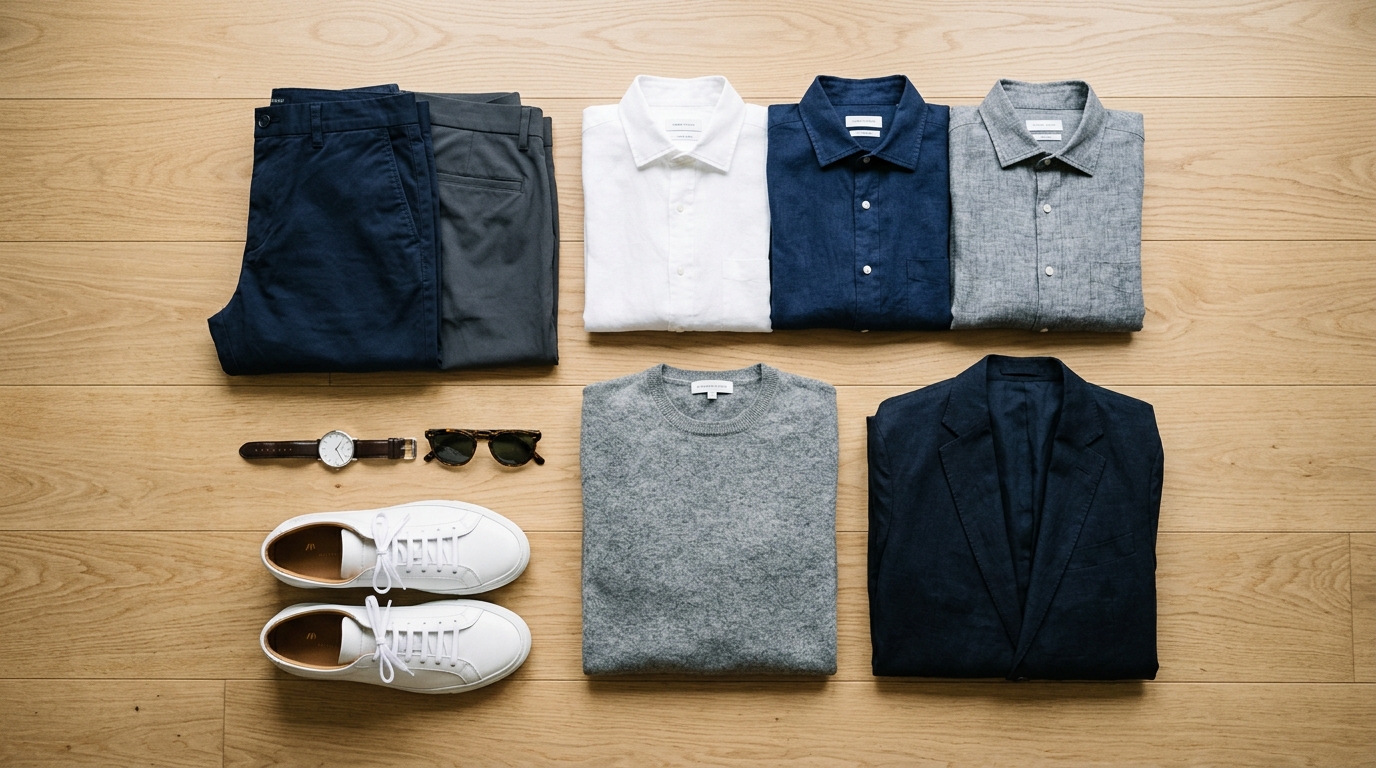
- The Structured Button-Down: A high-quality shirt in navy, white, or light blue works as a casual top with shorts, a smart layer over a t-shirt, or formal attire when tucked into trousers.
- Technical Chinos or Tailored Trousers: Look for trousers made with performance stretch fabrics. They provide the comfort of athletic wear during long flights while maintaining a sharp appearance for dinners or business meetings.
- The Convertible Dress/Skirt: For women, a mid-length dress in a solid, neutral tone can serve as a daytime sight-seeing outfit, a beach cover-up, or an elegant evening dress when paired with minimal jewelry.
- The Lightweight Cardigan or Quarter-Zip: Works as a standalone sweater, an insulating mid-layer on colder days, or a pillow during transit.
When learning how to build a minimalist travel wardrobe, aim for a core setup of 5 tops, 3 bottoms, and 1 outerwear piece. This minimal setup yields up to 15 distinct outfit combinations—enough for over two weeks of travel without repeating an identical look.
2. Advanced Climate Layering: Temperature Control Without Bulk
How to Build a Minimalist Travel Wardrobe? Packing heavy winter coats or thick knits eats up valuable suitcase real estate fast. Instead of relying on single heavy garments, master the three-layer insulation system. Air trapped between thin layers acts as a thermal barrier, keeping you warmer than one bulky jacket would while offering complete flexibility when temperatures fluctuate.
The Three-Layer Breakdown
- The Moisture-Managing Base Layer: Worn close to the skin. Choose breathable, moisture-wicking materials like lightweight merino wool or high-grade synthetic blends. These fabrics keep skin dry, which is essential for preserving body heat in cold weather and staying cool in heat.
- The Thermal Mid-Layer: Traps body heat while remaining breathable. An ultra-lightweight packable down jacket or a thin fleece pullover fits this role best.
- The Weather-Shield Outer Shell: A thin, unlined waterproof and windproof jacket. It seals in warmth generated by your mid-layer while keeping rain and wind out.
By combining or stripping away these three layers, you can comfortably navigate temperature shifts from 5°C (40°F) up to 25°C (77°F) using less than two pounds of total clothing weight.
3. Storage Optimization: Packing Cubes and Space Creation
How to Build a Minimalist Travel Wardrobe? How you pack is just as important as what you pack? Using structured packing organization prevents your bag from turning into a disorganized mess after day two of your trip.
The Science of Rolling vs. Folding
For most garments, tight rolling outperforms traditional flat-folding. Rolling forces air out of fabric fibers, reduces storage volume by up to 30%, and prevents the deep vertical creases caused by sharp folds.
- Roll: T-shirts, trousers, jeans, synthetic base layers, and casual shirts.
- Fold: Structured blazers, stiff collar shirts, or heavily tailored items.
Maximizing Packing Cubes
Divide your gear into specific compression cubes based on function:
- Cube A (Large): Trousers, shorts, and mid-layers.
- Cube B (Medium): Tops, t-shirts, and casual shirts.
- Cube C (Small): Socks, underwear, and sleepwear.
The Golden Buffer Rule: Never pack your bag to 100% capacity at home. Always leave 15% to 20% empty space for souvenirs, laundry accumulation, or items bought along the way.
4. Crafting a Modular Color Palette
The easiest way to guarantee that every garment in your bag works with every other item is to establish a strict color hierarchy before packing.
Primary Neutrals (60%)  --> Black, Navy, Dark Grey, Charcoal
Secondary Tones (30%)   --> White, Beige, Light Grey, Olive
Accent Tones (10%)      --> Burgundy, Terracotta, Ochre, Mustard
- Base Neutrals (Dark Tones): Pants, jackets, and shoes should generally be dark (navy, black, charcoal). Dark colors hide trail dust, street grime, and accidental spills far better than light fabrics.
- Secondary Neutrals (Light Tones): Shirts and t-shirts can feature lighter neutrals (white, cream, light grey) to reflect sunlight and create visual contrast against dark trousers.
- Accents: Limit pops of bright color to small, lightweight items such as scarves, pocket squares, watch bands, or caps.
5. Footwear Rules for a Minimalist Travel Wardrobe
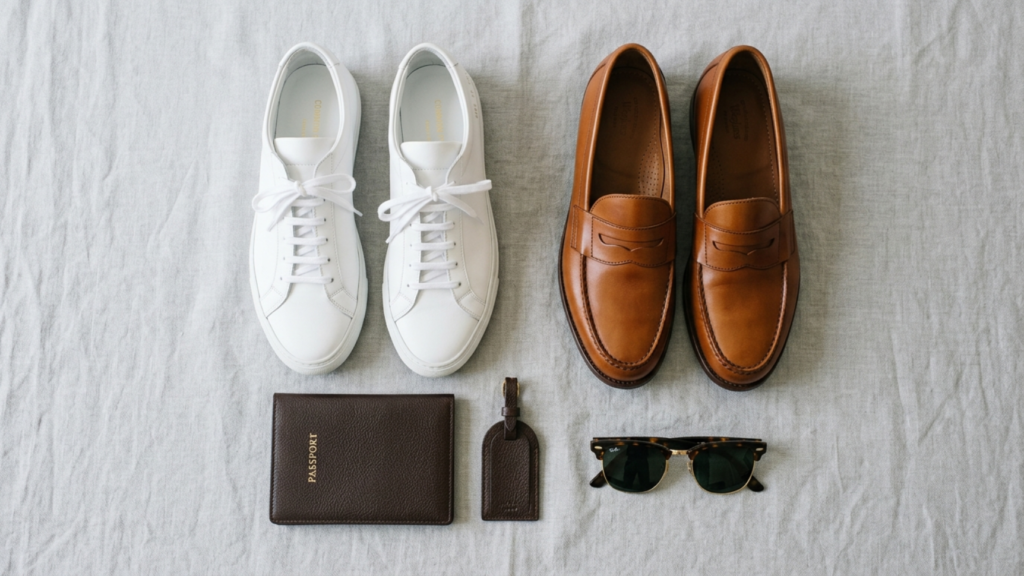
How to Build a Minimalist Travel Wardrobe? Shoes take up more volume and weight than almost any other item in your luggage. Packing three or four pairs of shoes instantly forces you into a larger bag.
The Two-Pair Maximum Rule
- The Primary Trainer / Walking Shoe: A neutral, highly cushioned sneaker built for 10,000+ daily steps. Opt for sleek, minimal designs in dark colorways so they don’t scream “gym shoe” when worn into nicer establishments.
- The Versatile Dress / Casual Shoe: Leather loafers, minimalist leather sneakers, or dark Chelsea boots for men; supportive sandals, chic flats, or leather loafers for women.
Critical Rule: Never bring untested, brand-new shoes on a trip. Ensure all footwear has been worn for at least 20 hours prior to departure to avoid trip-ruining blisters.
6. Fabric Selection: Wrinkle Resistance and Odor Control
To keep your capsule wardrobe light, you need garments that can be worn multiple times before needing a wash. Understanding fabric properties allows you to pick clothing that stays fresh longer.
| Fabric Type | Wrinkle Resistance | Odor Resistance | Drying Speed | Best Used For |
| Merino Wool | High | Exceptional (3-5 wears) | Medium | Base layers, T-shirts, Socks |
| Linen | Very Low | Moderate | Very Fast | Hot climate shirts, Beachwear |
| Nylon / Elastane Blends | High | Low to Moderate | Extremely Fast | Travel pants, Activewear |
| Pure Cotton | Low | Low | Slow | Casual home use (Avoid for travel) |
- Why Merino Wool Reigns Supreme: Merino wool fibers contain natural lanolin, which actively prevents odor-causing bacteria from taking hold. It is naturally temperature-regulating and recovers its shape overnight when hung up.
- Technical Synthetics: High-grade polyester and nylon blends with anti-odor coatings offer rapid drying times, making them ideal for sink-washing in hotel rooms.
7. Elevating Minimal Outfits with Local Accessories
A minimalist base wardrobe acts as a clean, neutral canvas. To prevent your outfits from feeling monotonous over long trips, use accessories to change the aesthetic tone without clogging your suitcase.
- Scarves & Wraps: A lightweight wool or silk scarf adds instant warmth on drafty flights and elevates a simple t-shirt and jeans into a refined evening outfit.
- Statement Eyewear & Watches: A classic pair of sunglasses or a versatile field watch changes the visual focus of an outfit instantly.
- Local Finds as Functional Souvenirs: Instead of buying trinkets, purchase a local belt, handmade scarf, or unique hat while traveling. These items add regional flair to your neutral wardrobe and carry lasting memories.
8. Cultural Sensitivity and Smart Modesty
Packing light requires thoughtful consideration of local social norms. In many regions across Southern Europe, the Middle East, South Asia, and Southeast Asia, wearing overly revealing clothing can restrict access to religious sites, historical monuments, and conservative neighborhoods.
The Universally Respectful Capsule
How to Build a Minimalist Travel Wardrobe? Rather than packing specialized garments for specific cultural sites, ensure your packing list includes pieces that cover shoulders and knees while staying cool:
- Lightweight Linen Trousers or Maxi Skirts: Keep legs covered while allowing maximum airflow in humid climates.
- Breathable Long-Sleeve Linen Shirts: Offer protection from both the harsh sun and conservative dress codes.
- A Light Sarong or Large Scarf: Compact enough to stay in your daypack, ready to cover shoulders or head when entering temples, churches, or mosques.
9. Destination-Specific Packing Checklists
Different climates require specific gear focus. Use these streamlined checklists tailored to your trip’s primary environment:
A. Tropical / Coastal Destinations
- 4 Breathable T-shirts / Linen Tops
- 2 Pairs Light Shorts / Skirts
- 1 Pair Light Linen Trousers
- 1 Swimsuit
- 1 UV Protective Sun Shirt
- 1 Pair Breathable Walking Shoes
- 1 Pair Water-Resistant Sandals
B. Cold / Mountainous Regions
- 2 Thermal Base Layer Tops (Merino Wool)
- 2 Mid-Layer Sweaters / Fleeces
- 2 Pairs Heavy-Duty Travel Trousers
- 1 Packable Down Jacket
- 1 Waterproof/Windproof Shell Jacket
- 1 Set Thermal Long Underwear
- 1 Pair Sturdy Waterproof Boots
- Warm Beanie, Gloves, and Wool Socks
C. Urban / European City Destinations
- 3 Tailored Shirts / Blouses
- 2 Pairs Dark Stretch Chinos / Dark Jeans
- 1 Unstructured Travel Blazer / Cardigan
- 1 Lightweight Rain Shell
- 1 Pair Minimal Leather Walking Sneakers
- 1 Pair Dress Shoes / Loafers
10. Real-World Case Studies: Minimalist Travel in Action
Case Study 1: The 14-Day Digital Nomad (Carry-On Only)
- Goal: Travel through Southeast Asia for two weeks with a single 35L backpack while working remotely.
- Wardrobe Strategy: Focused exclusively on quick-dry synthetics and merino wool. Packed 3 merino t-shirts, 1 linen button-down, 2 pairs of hybrid swim-shorts, 1 pair of lightweight travel chinos, 1 rain shell, and 1 pair of trail-running sneakers.
- Maintenance Routine: Hand-washed socks, underwear, and t-shirts in the bathroom sink every 3 days using travel wash sheets. Garments dried in under 6 hours due to fabric selection.
Case Study 2: The Multi-Climate Business Traveler
- Goal: Attend business meetings in London followed by a weekend in cold, rainy Scotland.
- Wardrobe Strategy: Relied on a navy unstructured travel suit (wrinkle-resistant wool blend), 2 performance dress shirts, 1 merino wool crewneck sweater, 1 pair of dark chinos, 1 packable rain trench, and sleek waterproof leather dress shoes.
- Result: Wore the suit jacket as a blazer on the weekend, layered the sweater under the trench coat in Scotland, and fit everything easily into an overhead-approved rolling bag.
Frequently Asked Questions (FAQs)
How to Build a Minimalist Travel Wardrobe? for a long trip!
Pack for 5 to 7 days, regardless of whether your trip lasts two weeks or two months. A one-week clothing cycle combined with mid-trip laundry is the ideal formula that keeps your bag light without requiring daily washing.
How do I wash my clothes in a hotel room?How to Build a Minimalist Travel Wardrobe?
- Fill the bathroom sink or tub with lukewarm water and add a few drops of travel laundry detergent or baby shampoo.
- Agitate the clothes in the soapy water for 2-3 minutes, focusing on underarms and collars.
- Drain the soapy water and rinse the garments thoroughly under cold running water.
- Gently wring out excess water, then place the garment flat on a dry hotel towel. Roll the towel up tight like a burrito and press down firmly to absorb remaining moisture.
- Hang the garment in a ventilated area away from direct humidity.
How do I handle heavy winter clothing when traveling in cold climates?
Always wear your heaviest and bulkiest items—such as your winter boots, heaviest sweater, and outer jacket—on the plane or train during transit days. This keeps the heaviest weight out of your bag and frees up internal luggage volume.
Won’t my clothes get ruined by constant rolling?
No. Rolling actually puts less stress on fabric fibers than folding, which creates sharp 90-degree creases that can weaken delicate materials over time. Knits, synthetics, wool, and blended fabrics thrive when rolled tightly.
What is the best luggage size for a minimalist travel wardrobe?
A 35L to 40L backpack or a standard 21-inch international carry-on suitcase is optimal. Bags within this range meet the overhead bin requirements for almost all major global airlines, eliminating checked bag fees and long wait times at baggage claims.
Final Thoughts
How to Build a Minimalist Travel Wardrobe? Knowing how to build a minimalist travel wardrobe is ultimately a mindset shift. By shifting your focus from “what might I need just in case?” to “what do I actually need to feel comfortable?”, you eliminate clutter and friction from your journey. Edit your options down, invest in adaptable fabrics, layer smartly, and enjoy the physical and mental freedom of packing light.